Salt & Measure

A different salt. Just the right amount.

Translate the salt in your recipe to the salt in your kitchen.

The salt converter

1 My recipe calls for

Decimals or fractions, such as 0.5 or 1 ½.

2 I’m using

Use this amountEquivalent by weight

On a kitchen scale

Volume compared to recipe
Level measures · US kitchen units · Salt volume is approximateWhy the type of salt matters ↓
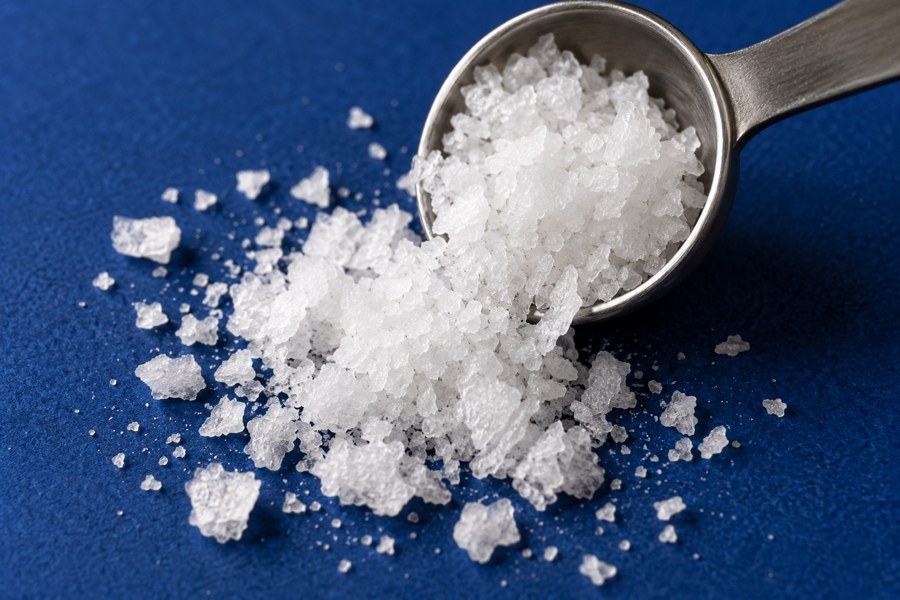
White salt crystals in a measuring spoon on a blue surface

Same spoon.
Different salt.

Fine grains pack tightly. Larger, airy flakes leave more space between crystals. So a spoonful of one salt can contain twice as much salt as another.

What’s in one teaspoon?Approximate weight
Table salt
5.88 g
Morton kosher
4.95 g
Diamond Crystal
2.83 g

A small swap can change the whole dish.

Suppose your recipe calls for one teaspoon, and you reach for a different salt without adjusting the amount.

An easy way to oversalt

Diamond Crystal → table salt

2.08× the salt

That teaspoon jumps from about 2.83 g to 5.88 g. You’ve added more than twice the salt the recipe intended.

The closer matchUse about ½ tsp of table salt.

Why it might taste flat

Table salt → Diamond Crystal

52% less salt

The same teaspoon now delivers only 2.83 g instead of 5.88 g. Less than half the intended salt can leave a dish underseasoned.

The closer matchUse about 2⅛ tsp of Diamond Crystal.

Even kosher salts differ

Diamond Crystal → Morton

75% more salt

Both are kosher salts, but a teaspoon of Morton weighs about 4.95 g. The brand matters when you’re measuring by the spoon.

The closer matchUse about ⅝ tsp of Morton kosher.

One reliable common measure

A gram is a gram.
A teaspoon depends on the salt.

For these cooking salts, weighing out the recipe’s grams gives you a much closer match, whatever the crystal size. 10 g of table salt and 10 g of Diamond Crystal deliver essentially the same amount of salt once dissolved.

If your recipe gives a weight, use it. If it gives teaspoons or tablespoons, match the named salt or convert it here. A scale that can resolve small amounts helps; measuring spoons are still useful for everyday cooking.

Finishing salts are a little different: crystal size also changes the crunch and how salt hits your tongue.

“Measuring things like salt or flour by volume is remarkably inconsistent.”
J. Kenji López-AltWriting about Harold McGee’s advice in Serious Eats ↗